

What is Multi-Sigma-Alchemy?
Multi-Sigma-Alchemy is an AI-powered platform that streamlines the entire R&D workflow, from data collection and preparation to property prediction, compound discovery, and AI model development.
Researchers can immediately use Multi-Sigma's pre-built property prediction models or create their own AI models from experimental data with a simple point-and-click interface. Molecular structures, crystal structures, spectra, compositions, and images are automatically converted into AI-ready features, removing the need for manual preprocessing or feature engineering.
Without programming or computational chemistry expertise, researchers can build predictive models, evaluate new candidates, and efficiently search vast chemical spaces to identify the most promising compounds for experimental validation.
Instead of spending time preparing data for AI, researchers can focus on making better decisions and moving from trial-and-error to prediction-driven research.
Why Multi-Sigma-Alchemy?
Build AI or Use AI. No Coding Required.
Start with our pre-trained property prediction models or build your own models from experimental data in just a few clicks. No Python, RDKit, or coding experience is required.
Turn Any Scientific Data into AI-Ready Features
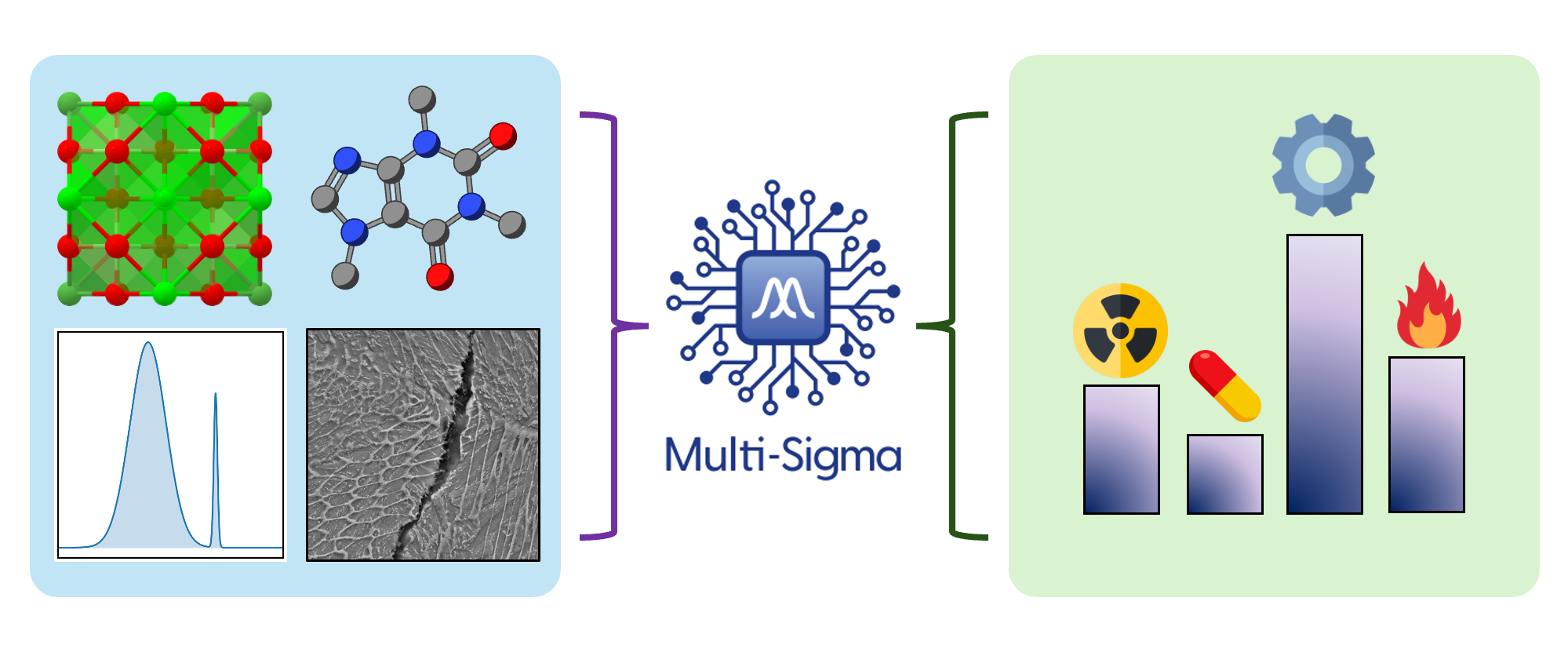
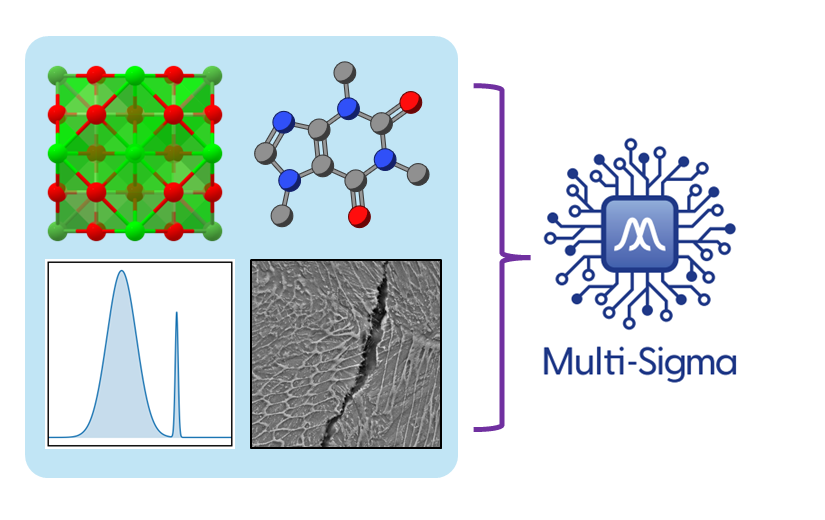
Multi-Sigma Alchemy supports far more than molecular structures. Import crystal structures, chemical compositions, spectroscopy data such as IR, Raman, XRD, and UV-Vis, or microscopy images. The platform automatically converts them into machine learning features without writing preprocessing scripts.
Build Models with Small Datasets
Get started with as few as 10 to 20 experimental samples. Our patented hyperparameter optimization technology automatically finds the best model settings, while fine-tuning allows existing models to be adapted for new research projects.

Explore Millions of Candidate Materials
Search through millions of pre-computed molecular property predictions to identify promising candidates before running experiments. You can also perform inverse design to discover structures that satisfy your target properties.

Features

1. Ready-to-Use Property Prediction Models
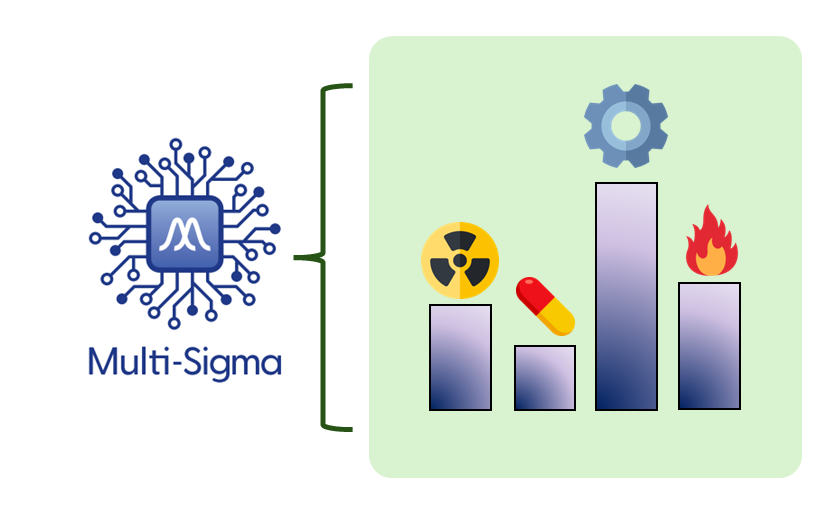
Access a growing library of AI models for drug discovery, physical property prediction, thermodynamic properties, toxicity assessment, mechanical properties, and other materials and molecular applications. Simply enter a structure to obtain predicted values without collecting training data or building a model yourself.

2. Turn Any Scientific Data into AI-Ready Features
Multi-Sigma-Alchemy supports far more than molecular structures. Import crystal structures, chemical compositions, spectroscopy data such as IR, Raman, XRD, and UV-Vis, or microscopy images. The platform automatically converts them into machine learning features without writing preprocessing scripts.
3. Automatic Molecular and Crystal Featurization
Generate AI-ready descriptors directly from molecular structures such as SMILES or crystal structures such as CIF files. Structural information including lattice parameters, atomic arrangements, and periodicity is automatically converted into machine learning features for both organic and inorganic materials.
4. Import Spectral, Image, and Composition Data
Import spectroscopy data including IR, Raman, XRD, and UV-Vis, along with microscopy images, texture images, and composition tables. Each data type is automatically transformed into numerical features for AI models without custom preprocessing.

5. Fine-Tuning and Multi-Stage AI Workflows
Adapt existing models to new datasets through fine-tuning or build complete AI workflows that connect multiple prediction stages. For example, a workflow can predict composition, then structure, and finally material properties within a single pipeline.

6. Structure Search, Millions of Predicted Molecules, and Inverse Design
Search by exact or similar molecular structures, or explore millions of compounds with pre-calculated property predictions to quickly identify candidates that match your requirements. Inverse design helps researchers discover new molecular structures based on desired target properties, enabling exploration beyond known compounds.
