
Predicting the compressive strength of concrete from its mix proportions is one of the important research topics in the field of civil engineering. In this case study using Multi-Sigma®, we used a concrete production dataset to perform: (1) prediction of compressive strength for unknown mix proportion data, (2) contribution analysis to identify the important variables, and (3) a search for the optimal mix proportions that maximize concrete compressive strength.
1. High-Accuracy Prediction of Concrete Compressive Strength Using Multi-Sigma®
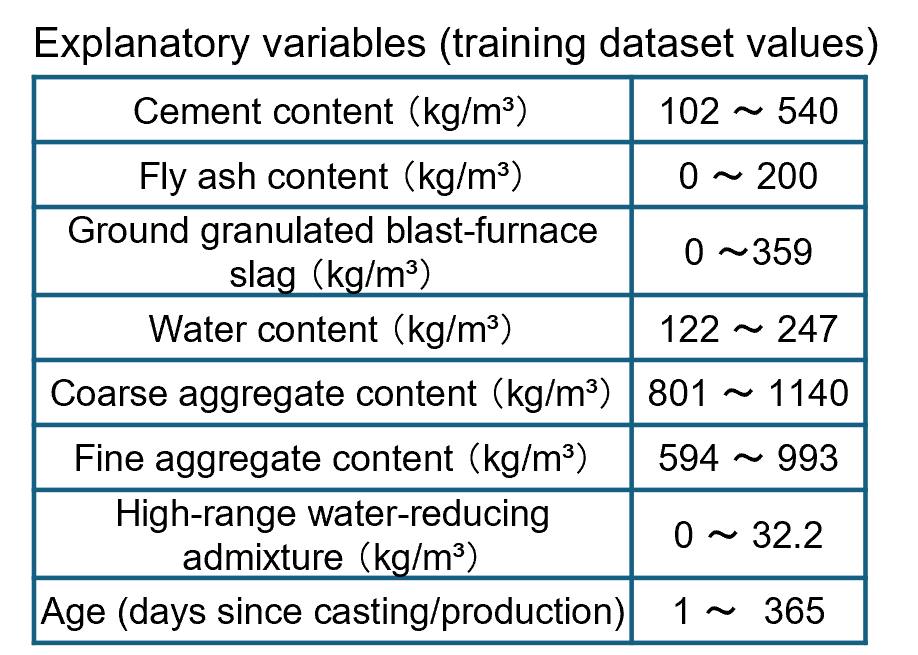
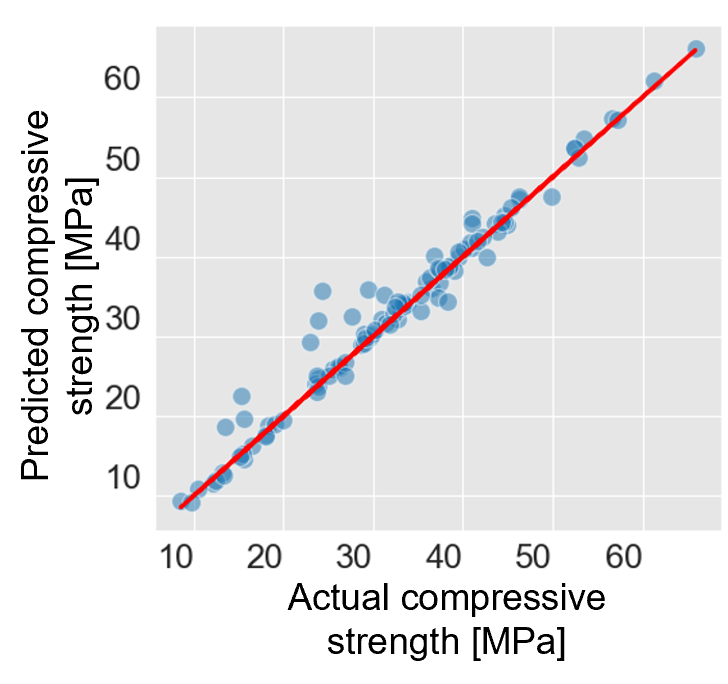
To predict the concrete compressive strength from the explanatory variables, we split 1,030 data samples into 930 training samples and 100 test samples, and built an AI model from the training data using Multi-Sigma®. In terms of prediction accuracy, the relative error was 5.14%, the RMSE was 2.31, and the correlation coefficient was 0.98.
2. Contribution Analysis of Concrete Compressive Strength Using Multi-Sigma®
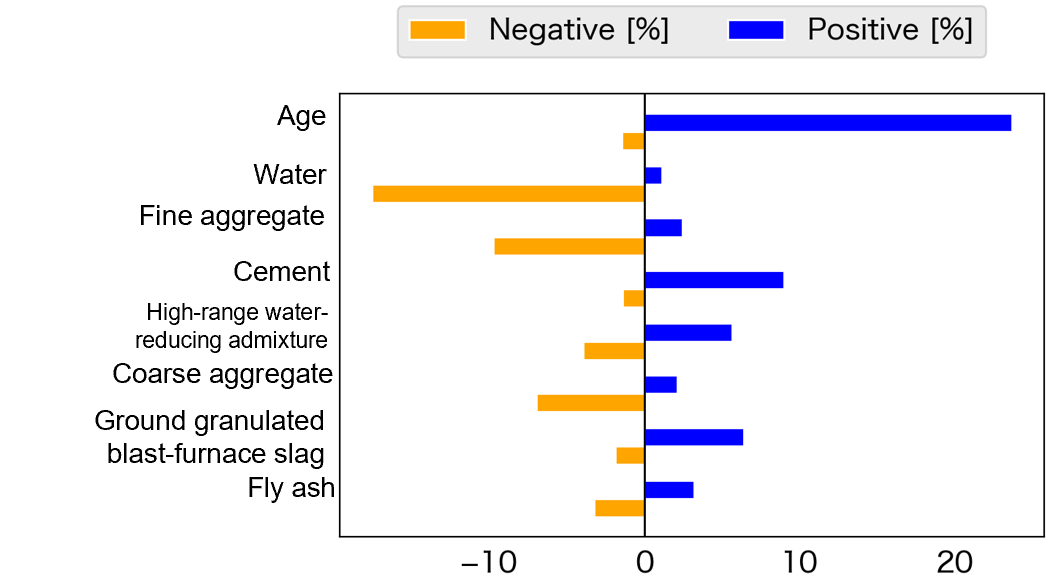
In general, it is not easy to analyze the relationship between the explanatory variables and the target variable. Multi-Sigma® includes a contribution analysis feature based on sensitivity analysis, which makes it possible to evaluate how each explanatory variable affects the target variable. Based on the analysis of this dataset, increasing the age has the most positive effect on concrete compressive strength. Increasing the proportions of cement and blast-furnace slag also has a positive effect on compressive strength. In contrast, increasing the proportions of water and fine aggregate have a negative effect on concrete compressive strength.
3. Optimization of Concrete Compressive Strength Using Multi-Sigma®
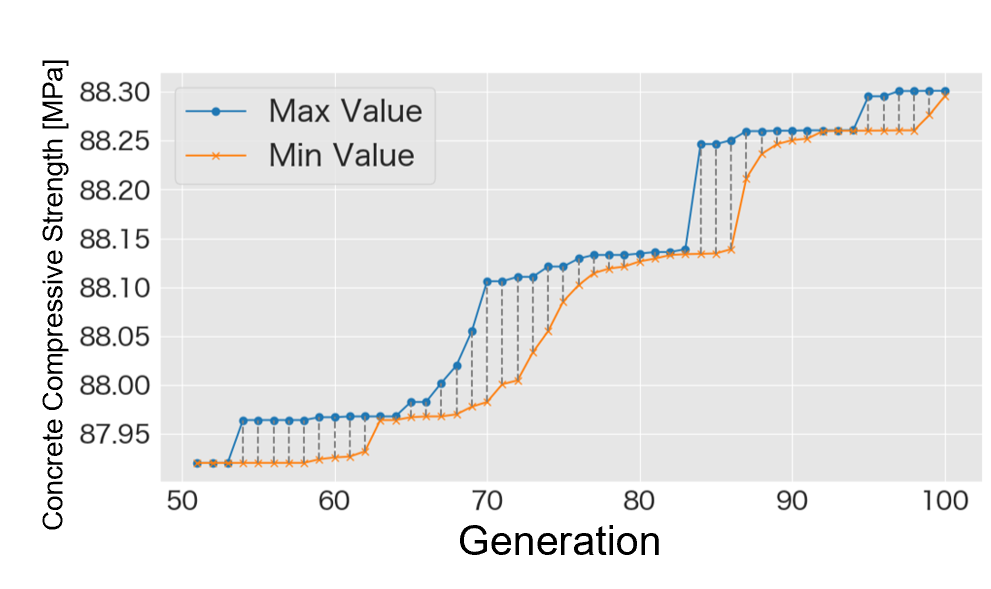
In this case study, we search for the conditions that maximize concrete compressive strength. As shown in the figure on the right, the maximum and minimum values of concrete compressive strength increase as the number of generations progresses. The conditions that yield the highest compressive strength are estimated as follows: an age of 172 days since production, a cement content of 397.87 kg/m³, a blast-furnace slag content of 358.93 kg/m³, a water content of 133.76 kg/m³, and a fine aggregate content of 737.00 kg/m³, among others.
Note: The data used in this analysis is processed and edited based on the data published as below, under Creative Commons Attribution 4.0 International (CC BY 4.0) license.
Dataset: Kaggle Concrete Compressive Strength Data Set (https://www.kaggle.com/datasets/elikplim/concrete-compressive-strength-data-set)
